Vienna's Architecture of Deceleration
Vienna is not merely about music and history – it is a system of deceleration. How to understand this imperial metropolis in three days.
TravelFeelings Editorial Team
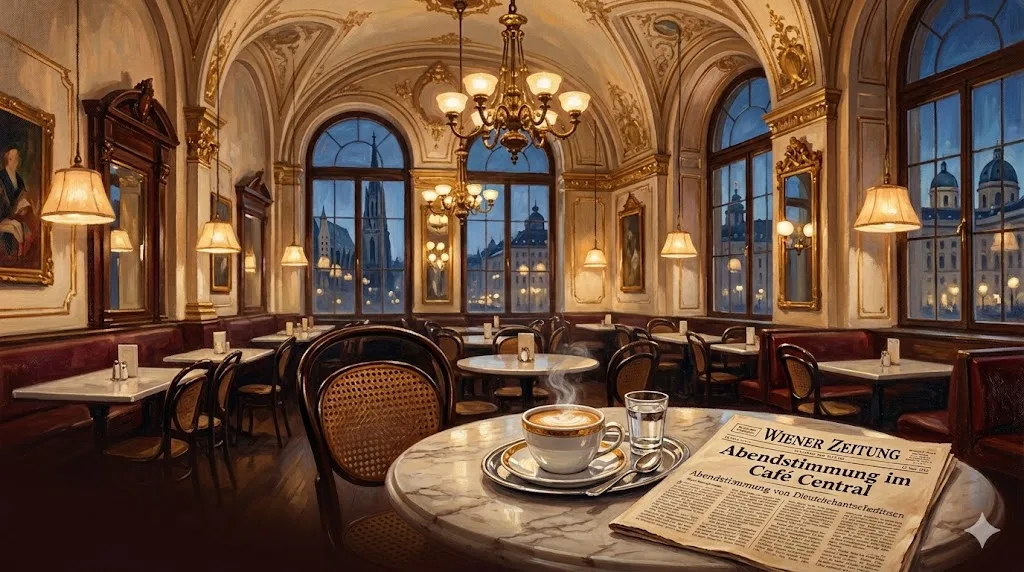
Vienna does not rush itself. This has nothing to do with the façades adorning the Ringstrasse, but rather with what lies beneath them: a logic of deceleration encoded in every institution, every plaza, every coffeehouse. A weekend in Vienna is not an exercise in checking off sights, but rather an education in a different temporal rhythm.
The city reveals its structure only to those who invest time. This applies particularly to Viennese coffeehouse culture, recognized as UNESCO intangible cultural heritage since 2011. It describes not merely a place, but a ritual: you sit down, order coffee – and pay only for the coffee, not for the hours that follow. In Vienna’s approximately 1,083 coffeehouses, time itself is treated as a commodity to be consumed, as much as the coffee bean itself.
Day One: Reading the Architecture
Begin at St. Stephen’s Cathedral, not for its Gothic form alone, but because this plaza reveals Vienna’s stratigraphy. The cathedral stands upon Roman foundations (Vindobona), was elevated to its present form in the medieval period, and has commanded urban hierarchy for centuries. The view from the Pummerin—the great bell—shows Vienna’s layered history all at once.
From there: Otto Wagner’s U-Bahn stations. Wagner brought Vienna underground between 1894 and 1901, but not without style. The stations at Schönbrunn, Karlsplatz, and Kettenbrückengasse are small pavilions of cast iron and faience—a geometric variant of Art Nouveau that dispenses with ornament entirely. They remain utterly timeless.
To observe carefully is to understand Wagner’s principle: functional design is not the opposite of beauty, but rather its most rigorous form. The Palmenhaus at Schönbrunn, also Wagner’s work, demonstrates the same principle: glass and iron unified so elegantly that construction and aesthetics fuse.
Return in the early evening to the Café Central—one of the oldest and most thoroughly documented Viennese coffeehouses. Trotsky, Freud, and Musil sat here. You need not know this fact to grasp why this café differs from any ordinary espresso bar. The high ceilings, marble-topped tables, and Thonet chairs are not nostalgia, but rather acoustic and functional design translated into wood and marble.
Day Two: Art History as Spatial Sequence
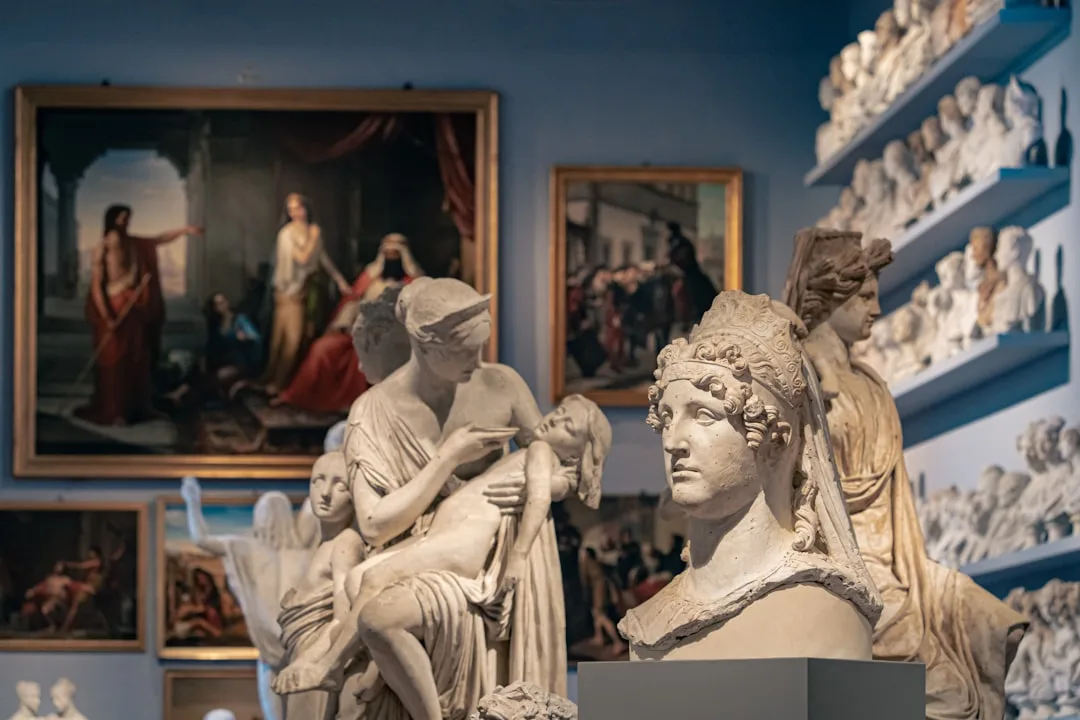
The Kunsthistorisches Museum lies scarcely ten minutes from Parliament, and this spatial proximity is no accident. The museum was conceived in the mid-19th century as the treasury of empire. Its painting gallery does not follow chronological order, but rather a dialogical arrangement: Egyptian artifacts converse with Greek sculpture, Renaissance paintings reflect Baroque magnificence. This ordering documents a philosophy—19th-century art historiography believed art history to be a comparative project. Walking through these rooms means wandering through a temporally bound idea of what art history is.
Afterward: the Belvedere. Prince Eugen built himself a summer palace that speaks of space as hierarchy unlike any other Baroque edifice. The ascent from the orangerie through garden and ramp to the Belvedere palace itself follows a Baroque poetics of space. Inside: Klimt’s “The Kiss”—one of those rare paintings that withstands the mythology surrounding it. Since 2023, the collection has been presented anew under the title “Picture this!”—400 works spanning 800 years.
In the evening: choose a coffeehouse not by online reviews, but by proximity. Enter, for example, the Café Diglas or the Prater Gartl. You will discover that spatial quality—not Instagram-worthiness—carries the experience.
Day Three: The Street Between Neighborhoods
The third day leads away from monuments into surrounding districts. The Servitenfeld, in Vienna’s ninth district, is called “Klein-Paris” by Viennese residents while tourists pass by. Cobblestone streets, the Servitenkirche, craft shops, and numerous local beisls populate the area: here Vienna exists in the plural. The Spittelberg, seventh district, reveals something similar—Biedermeier houses on narrow lanes, deliberately preserved historically.
The seventh district (Neubau) is Vienna’s most creative neighborhood: Asian street-food concepts standing alongside century-old coffeehouses. This is not assimilation, but urban normalcy. The districts of Wieden and Margareten (fourth and fifth) are regarded as Vienna’s culinary heart—not because of Michelin guides, but because old inns here still serve the same classics they have for decades.
Visit the Naschmarkt with its 120 stalls. It is less tourist attraction than intersection between past (Viennese housewives buying fish) and present (street-food concepts). The Brunnenmarkt in the sixteenth district is more authentic still—here the Balkans meet Turkey, Hungary, and Vienna simultaneously.
End not with a museum visit, but with a long walk. The Donauinsel, stretching over twenty kilometers, is artificially created yet has not become artificial—it is bathing area, green space, and everyday location all at once.
Understanding Gemütlichkeit
What international visitors often overlook: Vienna cannot be rushed through. Viennese coffeehouse culture—a UNESCO ritual since 2011—articulates this principle precisely. You order coffee and may sit for hours. Only this coffee appears on your bill, not the consumed time, not the newspaper reading, not the thoughts. This is not business strategy, but rather a statement: in Vienna, there exists a different metric than the consumption cycle.
You will find this rhythm everywhere. In the U-Bahn, where Wagner’s stations elevate transit to art. In museums, where spatial sequences are architecturally intentional rather than haphazard. In neighborhoods, where old and new generations coexist without one pedagogically correcting the other.
Your task for the weekend is not to see much, but to understand why Vienna refuses to hurry itself. You will not learn this in the museum shop, but rather over the fifth coffee at the Café Central.
Practical Information
The Kunsthistorisches Museum opens daily except Mondays from 10 a.m. to 6 p.m. (Thursdays until 9 p.m.). The Belvedere is likewise open daily except Mondays from 10 a.m. to 6 p.m. Online tickets save queuing time. Most coffeehouses open early and close late—note opening hours for smaller establishments in the seventh and ninth districts, which sometimes do not open until ten a.m.
The Donauinsel is accessible year-round and easily reached by public transport. Buses and U-Bahn lines connect all described locations. A weekly ticket is more economical than single tickets.