List
Budget Workations: Asia & South America
7 countries where you can work for under $1,500 monthly with stable infrastructure, visa options, and real coworking scenes—not just romantic narratives.
TravelFeelings Editorial Team9 min.
Vietnam · Southeast Asia
Vietnam is the ultimate budget backpacker destination. Cheap, authentic, sometimes chaotic — and definitely not boring.
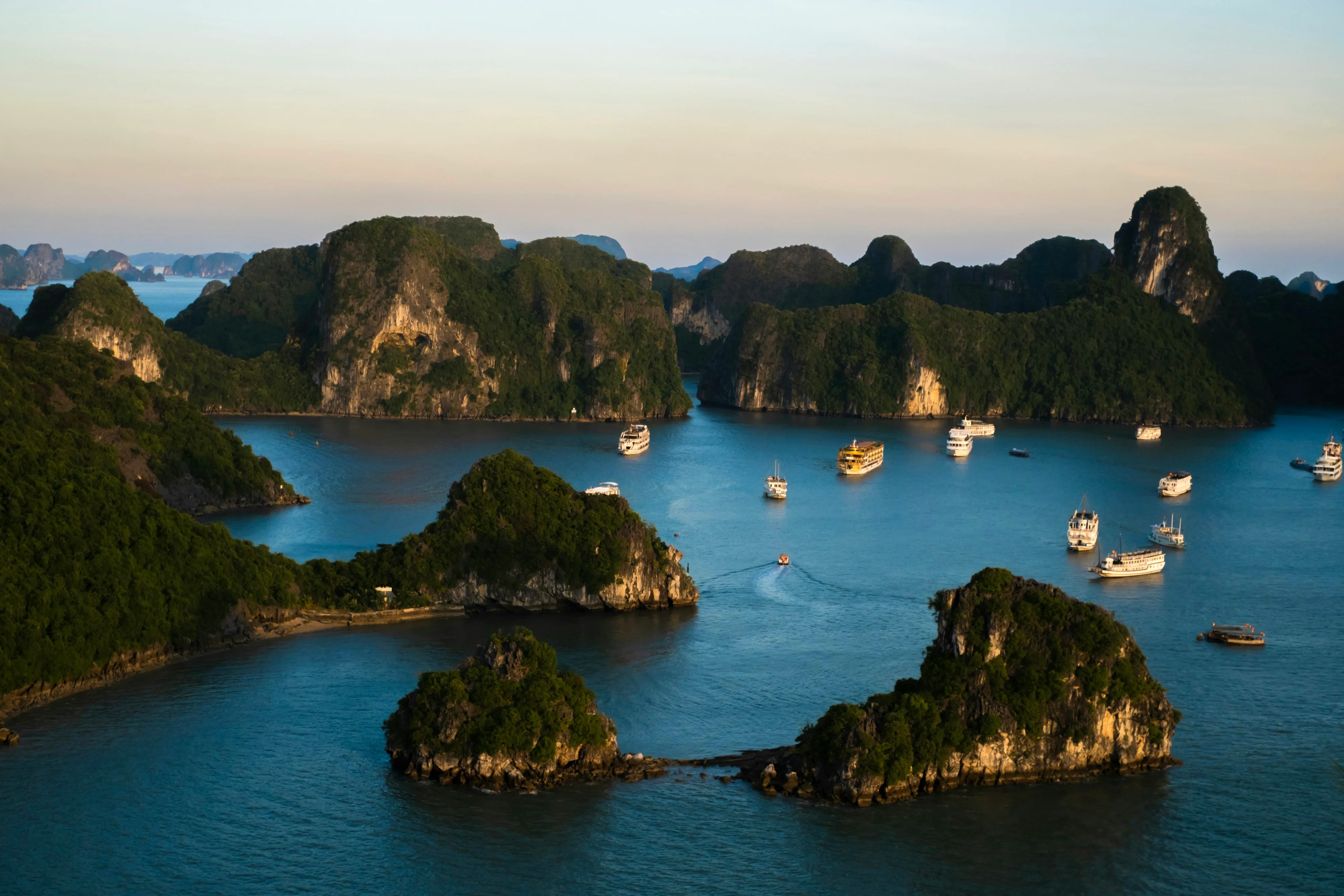
Halong Bay is the UNESCO classic. Over 1,900 limestone islands in emerald waters — big boats, caves like Hang Sung Sot (Surprise Cave), kayaking through narrow channels. A 2–3-day cruise runs $45–$90 per person (approx. 1.2–2.4 million VND), depending on comfort level. Easy bus access from Hanoi (2 hours), then directly onto the boat. Alternative: Cat Ba Island (less crowded than standard bay tours). Similar dramatic limestone scenery exists in Bali, Indonesia, though with a different cultural focus.
Ho Chi Minh City (Saigon) is chaotic, loud, thrilling — exactly what backpackers want. The War Remnants Museum shows war photography without sugar-coating. Ben Thanh Market is tourist-mandatory for souvenirs and street food. Bitexco Financial Tower offers city views (inexpensive). Saigon River evening cruises are budget romance ($12–$18). The city rewards moving fast over lounging, and that pace is part of its charm.
Hanoi is Vietnam’s heart: narrow alleyway Old Quarter, Hoan Kiem Lake, Ho Chi Minh Mausoleum (free but dress code: shoulders and knees covered), Ngoc Son Temple on a small island in the middle of the lake. The night market (evenings in the Old Quarter) is cultural immersion — tight streets, street vendors, chaos everywhere. Hanoi railway station is, however, a theft hotspot; avoid late-night arrival.
Hoi An is the Instagram destination. Old Town (UNESCO), painted yellow, historic houses, lantern festivals in autumn. The town is heavily touristed but well-preserved. Tailoring is cheap here (a custom suit in 2–3 days for $55–$110 = 1.5–3 million VND). An Bang Beach is 20 minutes by bicycle.
Mekong Delta is Vietnam’s rice bowl. Boat tours, floating markets (mornings), fruit plantations, small villages. A day trip is possible (90 minutes from Ho Chi Minh), but 2 days is better. Cost: $22–$45 (approx. 600,000–1.2 million VND).
Sapa sits in the northern mountains. Rice terraces, Hmong minorities, hiking, cool climate (below 50°F in winter, so pack layers). Sapa town itself is very touristy, but the surrounding hills remain beautiful. Plan 2–3 days. Mountain landscapes and indigenous cultures also appear in Costa Rica, though with entirely different ecosystems.
Nha Trang is the budget beach resort — decent beach, snorkeling is the main draw. Not Instagram-worthy, but cheaper than other coastal spots. Visit December–March; June–September is monsoon season (humid, rainy).
Da Lat is the hill station for escape from heat. 5,000 feet elevation, pleasant temperatures (59–77°F), lake, gardens, waterfall. Tourist infrastructure is solid. 2–3 days is realistic.
From Hanoi: Halong Bay is standard (2-hour drive, then multi-day tour). Alternative: Ninh Binh (2 hours), where Trang An caves rival Halong but cost less. Travelers preferring organized city tourism will find similar infrastructure in Japan — but Vietnam’s chaos offers more authentic roughness.
From Ho Chi Minh City: Mekong Delta day trips are possible but rushed (90 minutes each way). Better to spend 2 days.
From Hoi An: An Bang Beach (20 minutes by bike or cheap motorized taxi).
From Da Lat: Prenn Waterfall or Dreamer Lake for relaxation days.
Cat Ba Island is the Halong overflow destination. Fewer boats, fewer tourists, rock climbing is the draw. Cheaper than standard Halong tours. Ferry from Haiphong (1 hour) is cheap. 2–3 days here beats 1 day in Halong.
Phu Quoc Island used to be quiet but is getting crowded. Pearl farms, mangrove kayaking, beaches. Skip July–September (storms). October–June is ideal. Fly there (cheap with Vietjet, $25–$50) or take the overnight ferry.
Ninh Binh is the Halong alternative north of central Vietnam: Trang An caves, Tam Coc (boat ride through rice fields), cheaper and less touristy. A 2-day tour costs $33–$55 (approx. 900,000–1.5 million VND). Good place to pause for a few days.
Quy Nhon sits on the central coast. Wide beaches, few tourists, solid local food. Not Instagram-famous, but more authentic than Nha Trang. Bus from Hanoi (16-hour overnight, cheap) or flight (cheap Vietjet).
November through March is peak season nationwide. Dry, mild (64–86°F depending on region), clear skies. November and March remain warm. December and January are best but also most expensive and crowded (Christmas, New Year, Chinese New Year in February). Hotels charge double rates.
April is hot (95°F+) but dry and tourist crowds thin out — a good window for cheaper accommodations.
May through September is monsoon season. Rain, humidity, typhoon risk (especially September). Weather is unpleasant, but prices drop 30–50%. For budget backpackers with time, it’s doable.
North-south difference: The north (Hanoi, Sapa) gets chilly in winter (50–59°F), so pack a jacket. The south (Ho Chi Minh) stays warm year-round (77–95°F). Central Vietnam (Hoi An) is a middle ground.
| Jan | Feb | Mar | Apr | May | Jun | Jul | Aug | Sep | Oct | Nov | Dec |
|---|---|---|---|---|---|---|---|---|---|---|---|
| Low | Low | Sweet Spot | Sweet Spot | Peak | Peak | Peak | Peak | Peak | Peak | Sweet Spot | Low |
32° 22° | 33° 23° | 35° 24° | 36° 25° | 34° 25° | 32° 24° | 31° 24° | 31° 24° | 31° 23° | 32° 23° | 32° 23° | 31° 22° |
Removing shoes is everywhere-normal: homes, temples, pagodas, some restaurants (watch for signage). Slip-ons are more practical than laced shoes here.
Respect for Ho Chi Minh is non-negotiable. His image is everywhere; criticism is legally risky (government insult can result in police questioning). Social media comments are monitored. Simply stay respectful.
Chopstick etiquette: Don’t stick them vertically in rice (looks like a funeral ritual). Don’t point chopsticks at people. When eating phở (noodle soup), slurping is fine.
Offerings in shrines/temples are normal — candles, incense, fruit. Don’t step on offering tables or point your shoes at them.
Bia hơi culture: Small draft-beer spots where locals gather. Alcohol is important in social situations — declining is polite but less binding. Rice liquor (rượu) is deceptively strong; small glasses, big impact. “Một, hai, ba, dô!” (one, two, three, go!) is the drinking chant.
Family is central: Expect questions about family, relationship status (being single at 30+ is conversation material), kids. Not rude, just normal curiosity.
Government criticism or Ho Chi Minh disrespect: Not on social media, not in conversation (not even as a joke). Police questioning is a real risk, and the censorship behind it is real too.
E-cigarettes: Absolutely banned. Even a confiscated e-cig is diplomatic trouble. Don’t pack them.
Motorcycling without a helmet: Fine + danger. Vietnamese traffic is chaotic. Accidents aren’t romantic — they’re fatal. Tourists shouldn’t ride unless highly experienced.
Drug possession: Even traces can mean decades in prison. Not an exaggeration. Don’t experiment.
Displaying cash openly: Pickpocketing on buses, at stations, in night markets is real. Keep a small wallet, carry document copies.
Sleeping alone on overnight buses: Sleep-position = robbery-position. Keep valuables in bed or in a security pouch under clothing.
Women alone in bars/clubs late: Especially in Cat Ba, Hanoi, Ho Chi Minh. Spiked-drink reports aren’t rare. Not paranoia, but awareness.
Domestic flights: Vietjet and Bamboo Airways are budget-friendly ($20–$50 per flight = approx. 520,000–1.3 million VND), but baggage costs extra. Book online (Klook, 12Go) rather than in-country (fraud risk).
Buses: Cheap and everywhere. Fine during day, overnight buses are theft hotspots. 12Go.asia or Klook are safer than local vendors. Expect tight seats and long journeys.
Trains: The Hanoi-Ho Chi Minh overnight train (30+ hours) is an experience, not comfort. First-class cabins with 2 beds run $110–$165 (approx. 3–4.5 million VND). Theft is a problem — don’t lose sight of valuables. The journey is culturally rewarding (fellow travelers, scenery).
Grab/Uber: Available in Hanoi, Ho Chi Minh, Hoi An. Motorcycle taxi is cheap ($1–$3), but if you can’t ride a bike, take the car option. Standard taxis have meters.
Motorcycle rental: $3–$5 per day. Cheap, yes, but accident risk is extreme. Only for experienced riders. Insurance often isn’t included — read the contract.
eSIM is critical: Viettel for coverage, MobiFone for cities. Buy pre-trip online (Gigago, Airalo) or at airport counters. Physical SIM also works ($3–$5 value + credit).
EU citizens (including Germans) receive 45 days visa-free upon arrival — rule change as of August 2023. Passport must be valid for at least 6 months beyond entry. At least 2 blank pages required.
For longer stays, the e-visa online (evisa.immigration.gov.vn) covers up to 90 days. Cost: approx. $25–$50 depending on processing speed (3–5 business days standard, express more). No embassy visit needed.
Customs: Standard — no major surprises. Prescription medications must come with doctor’s letter and copy of prescription. Many drugs aren’t available in Vietnam.
Return ticket: Not legally required, but airlines often ask. Printed ticket or e-ticket screenshot on your phone suffices.
Arrival: Airports are well-run (Hanoi Noi Bai, Ho Chi Minh Tan Son Nhat). ATMs in terminals — withdraw VND immediately.
Tap water is not potable. Bottled water is everywhere for $0.05–$0.10 per liter. Use bottled water for toothbrushing.
Dengue fever is present but not panic-level. Mosquito repellent (local brands or DEET 20–30%), long sleeves at dusk/dawn when mosquitoes are active. Vaccines exist but aren’t routine for short-term travelers.
Japanese encephalitis: Travel medicine recommendation, but statistically rare for city tourists.
Travel insurance is mandatory: Must cover evacuation (flight to better medical infrastructure). Medical standards aren’t European-level. Good clinics exist (International SOS, etc.), but are expensive.
Street-bought medicine: Don’t trust it. Use pharmacies only (“Nhà thuốc” on signs). Antibiotics are often oversold locally.
Stomach issues: Hygiene is high in good restaurants; street food is calculated risk. Well-lit stalls are safer than dark ones. Fried > raw.
Violent crime is rare, but petty theft is real. Exchange money at safe locations, keep backpack zippers in front on buses, use hotel safes for documents.
Solo women: Travel is possible but requires awareness. Not paranoia, but heightened attention. Avoid overnight buses alone. Bars in tourist areas are safer. Local women contacts help (hostels, Couchsurfing).
7 countries where you can work for under $1,500 monthly with stable infrastructure, visa options, and real coworking scenes—not just romantic narratives.
How backpackers can cut travel transport costs by up to 80% using trains, buses, and local transport. Practical tips for Southeast Asia and beyond.
Discover Europe's cities in autumn without crowds. Architectural masterpieces and hidden gems for the culturally curious traveler.
Discover Europe's best cultural museums and galleries beyond the Louvre. Essential institutions and hidden gems across London, Vienna, Amsterdam, and more.