Guide
Autumn City Breaks: European Gems Away from the Crowds
Discover Europe's cities in autumn without crowds. Architectural masterpieces and hidden gems for the culturally curious traveler.
TravelFeelings Editorial Team10 min.
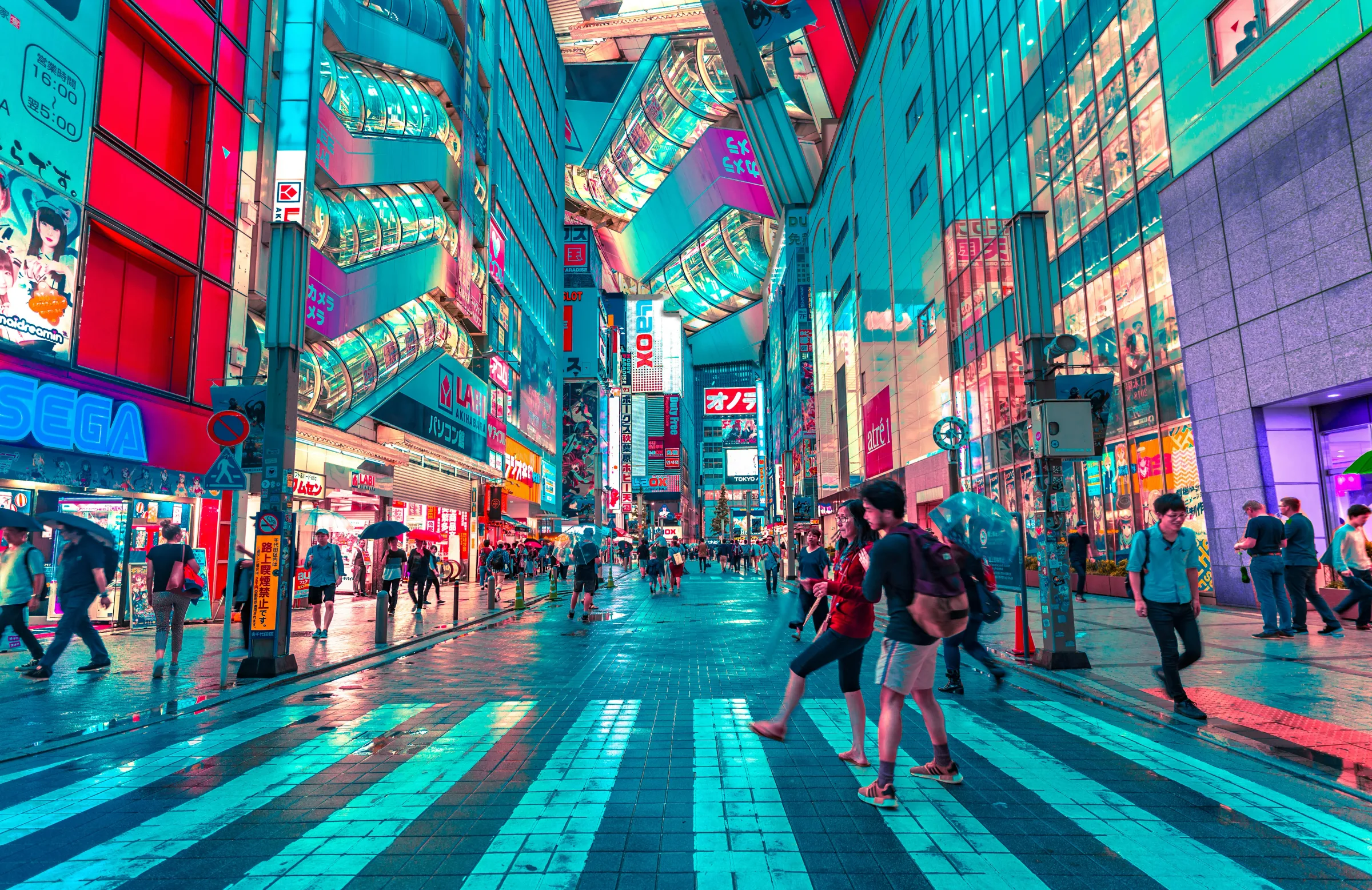
Japan · East Asia
Tokyo is Earth's largest metropolitan area — yet surprisingly accessible for travelers. Here's what you need to know before booking.
Senso-ji Temple (Asakusa) is Tokyo’s oldest temple (founded 645 CE) and remains the city’s busiest tourist site. The iconic red gate “Kaminarimon” and surrounding shopping street dominate the experience. Expect crowds year-round; visit early morning (before 08:00) for relative quiet. Admission free.
Tokyo Skytree stands at 634 meters — the second-tallest free-standing structure globally. Two observation decks at 350m and 450m offer 360-degree views. Tickets run 2,000–2,800 JPY (approx. $13–18 USD). Visit after sunset for night photography. Pre-book online to skip queues.
Tokyo Tower sits in Minato ward and often feels like Skytree’s charming older sibling. 333 meters tall, less crowded, and more intimate. Admission 900–1,600 JPY (approx. $6–10 USD). The adjacent Decks shopping complex holds restaurants and shops worth exploring.
Meiji Shrine is one of Japan’s most important Shinto sanctuaries, set in a forest-park. Admission free. Visit early morning to witness actual worship rituals before tourist crowds arrive. The surrounding park (Meiji-jingu Yoen) offers walking paths and seasonal plants.
Imperial Palace occupies central Tokyo. Parts of the East Gardens (Higashi-Gyoen) are open to the public free of charge. The palace itself is not accessible to tourists, but the outer gardens provide photo opportunities and context for Japan’s modern history.
Shibuya Crossing is the “world’s busiest pedestrian intersection” — 2,500–3,000 people per signal cycle. Free to observe from surrounding cafés or the Q-Front building (the Starbucks tower overlooking the crossing). Peak times: lunch hours (12:00–13:00) and early evening (18:00–19:00).
Akihabara represents Japan’s electronics and otaku culture. Electronics mega-stores, manga shops, arcade centers cluster densely. Admission free; window shopping costs nothing. The main drag, Chuo-dori, is closed to traffic on Sunday afternoons and offers dense street atmosphere and convenience store culture.
Shinjuku combines hypermodern skyscrapers with controlled chaos. The district is free to explore; restaurants, bars, and izakayas (casual pubs) abound. The Tokyo Metropolitan Government Building (locally “Tocho”) offers a free observation deck at 202 meters, a solid budget alternative to the paid towers.
Nikko lies 140 km north, reachable in 2–2.5 hours by train (Japan Railways, 2,800 JPY ≈ $18 USD). A UNESCO World Heritage site anchored by the Toshogu Shrine complex. Scenery peaks in autumn (October–November) with maple foliage. Lake Chuzenji above the town offers hiking and cooler temperatures.
Hakone sits west of Tokyo (90 km, 90 minutes, 3,000–4,000 JPY ≈ $20–26 USD). Famous for hot-spring resorts (onsen) and the Hakone Loop scenic route combining cable car, lake cruise, and vintage train. Mount Fuji dominates on clear days. One day is tight; two nights recommended for a proper onsen experience.
Kamakura stretches 50 km south, 55 minutes by JR train (920 JPY ≈ $6 USD). Home to the Great Buddha (Daibutsu) — a 13-meter bronze statue cast in 1252 (admission 200 JPY ≈ $1 USD). Temples, shrines, and beaches feel less crowded than central Tokyo. A full day trip is feasible.
Yokohama is immediately adjacent (30 km south, 30 minutes by train, 470 JPY ≈ $3 USD). A modern port city with the Landmark Tower (296m observatory), a Ramen Museum, and the Red Brick Warehouse complex. Easily paired with Kamakura as a two-destination day.
Yanaka Ginza is a traditional shopping arcade in northeast Tokyo where wooden machiya-style houses still stand. Small antique shops, tea houses, and unmarked local restaurants operate without tourist infrastructure. Travel time: 30 minutes from Shinjuku. Atmosphere feels distinctly non-touristy.
teamLab Borderless is a digital art museum combining projections and interactive rooms. After its original Odaiba site closed, it reopened in 2024 at Azabudai Hills in Minato ward. Admission 3,400–3,800 JPY (approx. $21–23 USD). Unique experience that avoids the typical tourist-trap feel while remaining Instagram-worthy. Digital experience concepts like teamLab reflect the experiential travel shift that Travel Trends 2025 described in detail.
Tsukiji Outer Market (partially preserved after the 2018 relocation) retains morning market energy. Local sushi restaurants serve three courses for 2,000–4,000 JPY (approx. $13–26 USD). Arrive by 06:00–07:00 for prime atmosphere and freshest stock. A comparable market energy in a European key — the Feira da Ladra flea market in Lisbon runs Tuesday and Saturday mornings.
Tokyo’s climate divides clearly into four seasons. Winter (December–February) brings dry, mild conditions (2–11°C). Snow is rare. Spring (March–May) delivers cherry blossoms (sakura) mid-March through mid-April — Tokyo’s peak season. Temperatures climb to 15–24°C. Hotels sell out months in advance; book early or expect premium rates. Cherry blossom season makes Tokyo one of the most competitive booking destinations in city travel.
Summer (June–August) turns hot and humid (24–32°C) with rainfall exceeding 150 mm/month. Air conditioning defines urban experience. September is the wettest month (234 mm) with typhoon risk. Autumn (October–November) mirrors spring: clear skies, 17–22°C, autumn foliage. Also crowded but more pleasant than summer.
| Jan | Feb | Mar | Apr | May | Jun | Jul | Aug | Sep | Oct | Nov | Dec |
|---|---|---|---|---|---|---|---|---|---|---|---|
| Low | Low | Sweet Spot | Sweet Spot | Sweet Spot | Peak | Peak | Peak | Peak | Sweet Spot | Sweet Spot | Low |
9° 2° | 11° 3° | 15° 6° | 20° 11° | 24° 16° | 27° 20° | 31° 24° | 32° 25° | 27° 21° | 22° 15° | 17° 9° | 12° 4° |
Onsen etiquette requires full washing and showering before entering public baths. Towels stay outside the water. Bathing is for relaxation in hot water (40–42°C), not swimming. Many onsen prohibit tattoos; verify beforehand.
Shoe removal is ubiquitous — homes, restaurants, hotels, temples, onsen. Shoeless zones are signaled by shoe racks or staff guidance. Slip-on shoes (loafers, clogs) beat lace-ups for practicality.
Chopstick protocol: never stick chopsticks upright in rice (resembles funeral ritual). Don’t point with chopsticks at people. Slurping ramen is encouraged.
Business card ritual involves offering and receiving cards with both hands. Reading a card fully shows respect; shoving it unread into your pocket signals disrespect.
Train phone silence is cultural law. Calls are taboo on trains; messages and emails are fine. People react coldly to phone speakers or conversations. Text communication is norm.
Don’t litter on streets. Tokyo has virtually no public trash bins. Eat in restaurants or buy from convenience stores where eating is permitted. Streets are not waste disposal.
Don’t enter temples/homes with shoes. Signage exists but isn’t always obvious. Watch others or ask when uncertain.
Don’t treat temples as theme parks. Temple grounds are spaces for prayer and reflection. Loud groups, selfie sticks, and constant photography disrupt worship. Show respect through silence and staying aside.
Don’t self-serve water in restaurants. Staff pour drinks. Self-service reads as too casual. Exception: izakayas (casual pubs) where self-service water dispensers exist.
Don’t tip. Japan has no tipping culture. If service charge appears on the bill (often 10%), no additional tip is expected. Extra tipping suggests the worker is underpaid, which is insulting.
Tokyo’s public transit is dense and punctual (average delay: 18 seconds per JR data). The JR Yamanote Line (green circle line) loops around central wards. A full loop takes 60–70 minutes and costs 210 JPY (approx. $1.30 USD). Buy a Suica or Pasmo card immediately at the airport (2,000 JPY initial, 1,500 JPY usable). These rechargeable contactless IC cards (tap on, tap off — no QR scanning) work on all transit plus convenience store purchases.
Between cities, the Shinkansen (bullet train) dominates. Example: Tokyo to Kyoto costs 13,320 JPY ($83 USD) in 2 hours. A 7-day Japan Rail Pass costs 50,000 JPY (approx. $309 USD) since the October 2023 price hike and only justifies itself if traveling across multiple prefectures. Tokyo-only travelers don’t break even.
Taxis are expensive (base fare 500 JPY ≈ $3 USD for the first ~1 km, then roughly 100 JPY per additional 250 m). Use taxis late-night (when trains stop around 01:00) or for inaccessible destinations. Most taxis don’t accept cards; carry cash.
Haneda Airport (14 km, 30 minutes by monorail, 500 JPY ≈ $3 USD) is the preferred entry point. Narita (60 km, roughly 60 minutes) involves a remote trek. The “N’EX” (Narita Express) train reaches Tokyo Station for about 3,070 JPY ≈ $19 USD; the Keisei Skyliner is a faster alternative, and airport limousine buses offer comfort (4,000–5,000 JPY ≈ $25–31 USD).
EU citizens receive a free tourist visa for 90 days upon arrival (airport or seaport). Immigration staff distribute an “Arrival Card” in-flight or at the gate; if missed, pick one up at arrival halls. Present your passport, return flight confirmation, and proof of funds.
The “Visit Japan Web” (vjw.digital.go.jp) is a pre-arrival online system that’s replaced paper forms since 2023. Display the QR code at immigration. Not mandatory but speeds the process.
Customs allows 760 ml of alcohol per type, 200 cigarettes, and 50 ml of perfume duty-free. Prescription medications (e.g., beta-blockers) require a doctor’s letter and prescription photocopy. Many medications aren’t available by prescription in Japan — bring your supply.
Return to home involves standard airline baggage policies. Japan dropped COVID test requirements in April 2023.
No mandatory vaccinations exist for Japan. Hepatitis A/B, typhoid, and Japanese encephalitis are travel medicine recommendations but statistically uncommon. Travel insurance is essential if medical evacuation becomes necessary (cost: $200,000+ potential exposure).
Tap water is drinkable throughout Tokyo — unlike many Southeast Asian destinations. Food safety standards are rigorous; stomach upset is rare.
Earthquake preparedness: Tokyo sits in an active seismic zone. The “Earthquake Early Warning” system sends phone alerts seconds before shaking. Schools and offices conduct regular drills (“Drop, Cover, Hold On”). Statistically, major quakes are infrequent; Western media overstates the risk.
Crime and safety: Tokyo ranks among the world’s safest large cities. Pickpocketing is uncommon. Solo travel at night is normal. Right-wing groups are marginal; you won’t be harassed. Local police (“Koban” neighborhood stations) are friendly but speak limited English.
Discover Europe's cities in autumn without crowds. Architectural masterpieces and hidden gems for the culturally curious traveler.
Discover Europe's best cultural museums and galleries beyond the Louvre. Essential institutions and hidden gems across London, Vienna, Amsterdam, and more.
A short trip need not be superficial. With deliberate route planning, you discover the cultural and architectural substance of Europe in three days — not merely the facades.
To truly understand a city, spend time in its markets. Street-food cultures reveal urban history, local identity, and social structures in immediate ways.