Guide
Autumn City Breaks: European Gems Away from the Crowds
Discover Europe's cities in autumn without crowds. Architectural masterpieces and hidden gems for the culturally curious traveler.
TravelFeelings Editorial Team10 min.
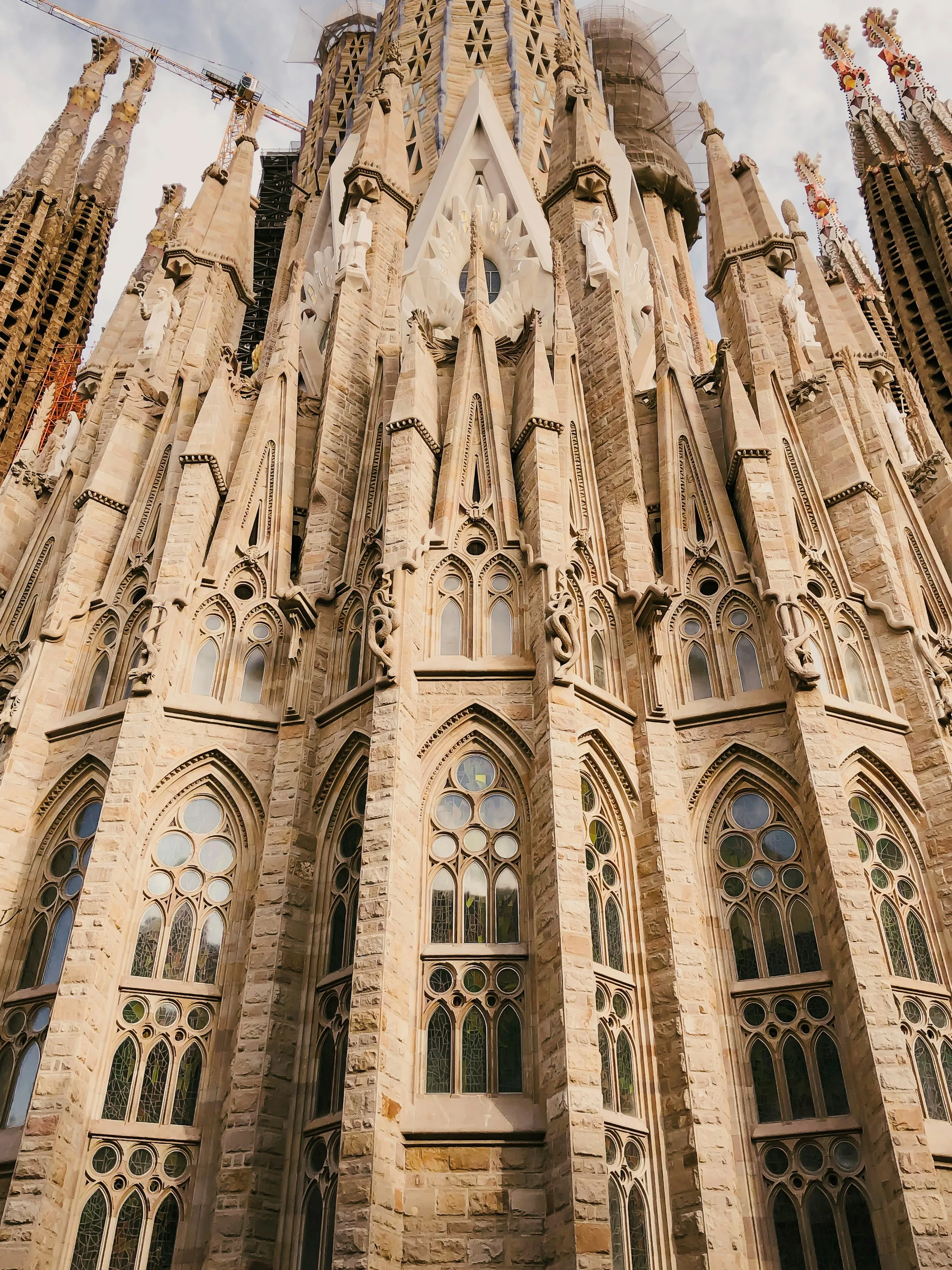
Spain · Catalonia
Barcelona pairs avant-garde architecture with city beaches and a strong Catalan identity. Gaudí's Sagrada Família reached completion in 2026.
The Sagrada Família dominates Barcelona from the northeast and is the city’s most iconic landmark. Gaudí’s basilica, left incomplete at his death in 1926, was finally finished in 2026, reaching 172.5 meters — making it the world’s tallest church tower. Admission is approximately $19 (about €18). The decades-long wait for completion became a symbol of Catalan optimism and stubborn individuality.
Park Güell sits high above the city and offers panoramic views across Barcelona. Originally planned as an exclusive residential development for the city’s wealthy, the project was abandoned and opened to the public in 1926. Gaudí’s signature colorful mosaic tiles, the dragon fountain at the entrance, and organic architectural forms make it Spain’s second-most-visited tourist site. Admission around $19 (€18). The monumental zone is capped at 400 tickets every half hour — buying tickets online in advance is essential.
Casa Batlló on Passeig de Gràcia is Gaudí’s residential renovation featuring a wavy facade and blue-green ceramic mosaic tiles. The house appears to breathe. Admission approximately $27 (€25) with audioguide. The surrounding Passeig de Gràcia is Barcelona’s luxury avenue lined with shops, cafés, and historic buildings.
La Rambla stretches 1.3 kilometers from Plaça Reial down to the Columbus Monument at the harbor. Street performers, restaurants, and museums line the promenade. Warning: La Rambla is pickpockets’ territory. Keep bags in front, minimize valuables.
The Gothic Quarter (Barri Gòtic) preserves medieval alleyways dating to the 13th century and earlier. The Barcelona Cathedral dominates the main plaza. The quarter is a maze of narrow streets with hidden squares, restaurants, and vintage shops. Daytime traffic is heavy with tourists; evenings feel more authentic.
La Barceloneta was once a fishing village and sits directly on the beach. Today it blends fishing tradition with tourism: chiringuitos (beach kiosks) and tapas bars dot the shore. The beaches (Playa de la Barceloneta, Bogatell) are clean and well-maintained, though crowded in summer.
Camp Nou is FC Barcelona’s stadium, holding 100,000 spectators and open for tours — one of Catalonia’s holiest sites. The passion surrounding Barça transcends sport; it is cultural identity. Museum admission around $28 (€26).
Montserrat lies 50 kilometers northwest and is reachable by train in one hour. A Benedictine monastery sits perched on dramatic rust-colored sandstone formations. The landscape is spectacular, especially at sunset. The monastery houses the Black Madonna, an important Catholic pilgrimage site. Hiking between the rock formations is possible; the monastic canteen serves simple but hearty meals.
Sitges is 35 kilometers southwest and accessible by train in 40 minutes. This coastal town is one of Europe’s earliest seaside resorts, featuring Art Nouveau architecture, long beaches, and a relaxed atmosphere. The Cau Ferrat Museum displays a deceased artist’s collection. Sitges also attracts the LGBTQ+ community and maintains a liberal, welcoming climate. Ideal for a beach day with cultural exploration. For more Mediterranean beaches, Mallorca offers extensive coastal options beyond Barcelona.
Tarragona sits 100 kilometers south along the coast, reachable by train in approximately 90 minutes. The city was a Roman colony and preserves an amphitheater, triumphal arch, and cathedral overlooking the sea. The archaeological park is comprehensive and less crowded than Barcelona. Tarragona’s Old Town has narrow streets and authentic tapas bars where locals eat.
The Bunkers del Carmel are remnants of a civil war anti-aircraft battery hidden on a hilltop in the north. Admission is free, and the view of Sagrada Família and the cityscape is spectacular. The ruins attract artists and locals rather than tour groups. Sunset visits are particularly peaceful and rewarding.
El Born is an artist and design district featuring narrow medieval alleys, vintage shops, galleries, and small restaurants. The neighborhood retains authenticity not yet fully gentrified like the Gothic Quarter. The 14th-century Church of Santa Maria del Mar is a prime example of Catalan Gothic and elegant. El Born is ideal for strolling without heavy tourist pressure.
Parc de la Ciutadella is Barcelona’s largest park, with lakes, museums, palaces, and expansive lawns. Built for the 1888 World’s Fair, it still houses the Natural History Museum and Museum of Modern Art. Locals relax on grass, rent paddle boats, and sit at waterside cafés. Unlike crowded tourist attractions, the park feels local and unhurried.
Poblenou was once an industrial zone and is now one of Barcelona’s trendiest neighborhoods for street art, design studios, and alternative culture. The transformation is ongoing — the contrast between old factory buildings and new galleries is visible. The area hosts several beach clubs; Rambla del Poblenou terminates at the shore. Less touristy than La Barceloneta and more locally authentic.
| Jan | Feb | Mar | Apr | May | Jun | Jul | Aug | Sep | Oct | Nov | Dec |
|---|---|---|---|---|---|---|---|---|---|---|---|
| Low | Low | Low | Sweet Spot | Peak | Sweet Spot | Peak | Peak | Sweet Spot | Sweet Spot | Low | Low |
14° 5° | 15° 5° | 17° 7° | 19° 9° | 22° 13° | 26° 17° | 29° 20° | 29° 20° | 26° 17° | 22° 14° | 17° 9° | 15° 6° |
May through June and September through October are ideal. Temperatures range from 18 to 25°C (64–77°F), rainfall is minimal, and tourist crowds are lighter than peak summer. Hotels are cheaper, restaurants less booked. These shoulder months offer the best combination of weather and value.
July and August are hot (up to 34°C / 93°F) and swamped with tourists. Many locals vacation away; some shops and restaurants close. The air is humid and oppressive. Only choose these months if no other timing is possible.
November through February is mild (daytime highs around 14–17°C / 57–63°F) but wetter. Rain is common, and sunshine is limited. The advantage: the city is far emptier, hotels are cheaper, museum visits less crowded. Suitable for cultural and architectural exploration; less ideal for beach time.
Barcelona’s identity is fundamentally Catalan, not Spanish. Catalonia is an autonomous region with its own language (Catalan), history, and political ambitions. The Catalan flag (Senyera) — four red stripes on yellow — is everywhere. This regional identity infuses everything: language, festivals, politics. A long history of suppression and ongoing independence movements remain current.
FC Barcelona is an institution of Catalan culture, well beyond its role as a soccer club. Thousands of supporters sing and cheer not purely from sporting enthusiasm but from identity. Camp Nou is pilgrimage ground. Match days are social events. Criticizing or dismissing Barça touches cultural nerves.
Spanish meal culture runs on late schedules. Lunch (comida) occurs between 13:00 and 15:00 and is the main meal. Dinner (cena) begins after 21:00, often later. Restaurants don’t open for dinner until 20:00. This rhythm shocks Central Europeans but is standard. Tapas culture — small plates with drinks in informal settings — is social bonding. Tipping is not obligatory but 5–10 percent is customary and welcome.
Sant Jordi (Saint George’s Day) is celebrated April 23. Men traditionally give roses, women give books — roles are flexible. The tradition brings Barcelona’s Old Town alive with flower vendors and book stalls. It is an exchange-and-togetherness celebration rooted in Catalan identity.
The Sardana is a traditional Catalan circle dance. Public performances occur several times weekly in public squares (the Cathedral on Friday mornings). Tourists can participate — the steps are straightforward. It is less an art form than cultural affirmation.
Pickpocketing is a daily risk in Barcelona, particularly on La Rambla and the L3 metro line. Theft gangs operate professionally: one person distracts while accomplices open bags. The tactic succeeds best when tourists are uncertain or distracted. Prevention: carry rucksacks in front, secure bags, keep phones hidden. On buses and trains, keep backpacks tight against your body. Police are present, but filing a report is bureaucratic.
La Rambla attracts tourist-oriented restaurants offering poor value and quality. Many charge inflated prices for substandard ingredients and aggressive sales tactics. Better restaurants are two streets over in side alleys (Gothic Quarter, El Born). When in doubt: eat where locals eat.
Flower sellers and portrait artists on La Rambla can be pushy and charge astronomical prices for quick rose arrangements or sketches. A firm “I’m not interested” is your best defense. Those who cannot refuse get harassed.
Driving in central Barcelona is impractical. The ZBE (Zona de Baixes Emissions) low-emission zone inside the ring roads restricts older, more polluting vehicles, which must register beforehand. Parking is scarce and expensive ($16–$27 / approx. €15–€25 per day). Metro, trams, and buses are reliable, affordable, and faster than car traffic. For day trips: rent a car outside the city.
Barcelona-El Prat Airport lies 10 kilometers southwest. The L9 Sud metro line connects Terminal 1 and Terminal 2 directly to central Barcelona. A special airport ticket (Bitllet Aeroport) costs approximately $6 (about €5.70); standard integrated fares such as the T-casual are not valid for the airport metro stations. The journey to the center takes 30–35 minutes.
Taxis are expensive. The minimum fare is $23 (approx. €21), with typical journeys to the center costing $32–$43 (approx. €30–€40). The Aerobus is a convenient alternative — a direct shuttle to Plaça de Catalunya costing about $6 (approx. €6).
The T-casual card (approximately $14 / €12.55) covers 10 single journeys for one person on metro, tram, and bus and is the best value for short stays; the older T-10 was discontinued in 2020. A single journey costs about $3 (€2.65). The metro has five lines (L1–L5) covering all major tourist sites. Trams move slower but offer scenic rides. Night buses (Líneas Nocturnas) operate after midnight.
AMBici is the bike-sharing system with about 400 stations citywide. Registration is free via website or app. Rides cost approximately $0.54–$2.16 (€0.50–€2) per hour. Bicycles are practical for short distances; the cycling infrastructure is well-developed.
German and EU citizens need no visa for stays up to 90 days in Spain. A valid ID card or passport is required. The travel document must be valid for your entire stay.
The EU’s Entry/Exit System (EES) came into effect in 2025. Non-EU citizens (Australians, Americans, etc.) must register fingerprints and photographs. EU citizens have simplified procedures.
Barcelona charges a tourist tax per person per night, combining Catalonia’s regional levy with a municipal surcharge. As of 2025, the total runs roughly $5 to $8 (approx. €4.50 to €7.50) per night depending on your accommodation category, and it is capped at seven nights per stay. Hotels and apartments usually add it to your bill at checkout rather than including it in the room rate; children under 17 are exempt.
Cash purchases in Spain are limited to $1,090 (€1,000) per transaction. Transporting larger amounts requires declaration. This regulation combats money laundering.
A new vehicle safety regulation takes effect in 2026: the old warning triangle and vest are replaced by V-16 LED warning lights. Drivers bringing their own vehicles should familiarize themselves with new requirements.
Barcelona’s low-emission zone (ZBE) affects older and less eco-friendly vehicles. Registration must be completed online beforehand. Newer and many Euro-6 vehicles are already exempt.
Barcelona’s tap water is clean and drinkable. Bottled water is unnecessary, though hotels and restaurants sell small bottles.
Standard vaccinations (tetanus, diphtheria, whooping cough, measles) are recommended but not mandatory. Malaria is not a concern in Barcelona. Parts of southern Spain (Almería, Granada) have minimal malaria risk, but Barcelona is in the north and unaffected.
Dengue-carrying mosquitoes (Aedes aegypti) are active in southern Spain; Barcelona, in the north, is less vulnerable. Nonetheless, summer mosquito protection is sensible: lightweight clothing, insect repellent during evening hours.
Barcelona is a relatively safe city with professional police. Serious crime is rare. The main risk remains pickpocketing in tourist areas. Residential neighborhoods outside the center are quiet and secure. Late-night metro travel is safe — trains are well-lit and populated.
Medical care is excellent. European visitors with valid health insurance (EHIC card) access Spain’s public healthcare system. Private clinics are also available. Pharmacies (farmacias), identifiable by a green cross, sell most medications without prescription.
Discover Europe's cities in autumn without crowds. Architectural masterpieces and hidden gems for the culturally curious traveler.
Discover Europe's best cultural museums and galleries beyond the Louvre. Essential institutions and hidden gems across London, Vienna, Amsterdam, and more.
A short trip need not be superficial. With deliberate route planning, you discover the cultural and architectural substance of Europe in three days — not merely the facades.
To truly understand a city, spend time in its markets. Street-food cultures reveal urban history, local identity, and social structures in immediate ways.