Fair-Trade Travel: Supporting Local Communities
Understand how fair-trade travel works, which organizations lead the way, and how to ensure your travel budget stays with local communities while creating genuine economic value instead of extractive dependency patterns.
TravelFeelings Editorial Team
The Extraction Problem in Conventional Tourism
When you book a package tour, you might expect a fair share of your money to stay in your destination. The research paints a sobering picture: in some regions, only 10 to 15 percent of tourism spending actually reaches local hands. The rest flows to international hotel chains, multinational airlines, and foreign tour operators — back to Western capitals. This extraction model leaves visited countries richer in visitor numbers, but not necessarily richer in real prosperity.
The dilemmas here are not straightforward to solve. Mass tourism creates jobs — that’s true. But it often creates precarious ones: hotel cleaners without labor contracts, guides paid subsistence wages, local restaurants forced to reshape menus for Western tastes. Simultaneously, tourism inflates local living costs. Land prices spike. Traditional craftspeople can’t compete and drift into tourism work — not from passion, but economic pressure. The result is a dependency disguised as development.
Fair-trade travel attempts to interrupt this cycle. It’s not an argument against travel itself — Sara still travels for research. It’s an attempt to structure tourism so receiving communities don’t just get jobs, but retain agency, receive fair compensation, and shape their own tourism futures.
What Fair-Trade Travel Actually Is
Fair-trade travel is not a single, standardized certification like fair-trade coffee. It’s more a constellation of practices and principles that different organizations interpret in different ways. Some associations, like the German network Forum Anders Reisen (with roughly 140 certified member companies), have concrete criteria catalogs: corporate social responsibility, human rights protection, child protection, water management, energy efficiency, and local project development.
Switzerland-based Fair-Unterwegs operates under a different framework — the G.L.Ü.C.K. concept — prioritizing ultra-local gastronomy, minimal environmental footprint, fair business practices, and continuity in partnerships. And operators like FairAway position themselves as social enterprises, transparently flowing 10 percent of profits back into local community projects — from school construction to sustainable agriculture.
The through-line among these approaches: keeping value generation local rather than extracting it. A concrete example: when you book a local guide instead of a multinational operator, not only does the guide’s wage stay with him, but so does his network — the restaurants he recommends are often family-run. The economy functions as a multiplier: research shows that for every dollar of direct tourism income, roughly two additional dollars circulate in the local economy, because the guide shops locally, restaurants pay suppliers, and craft products sell.
The Effects of Real Value-Keeping
Where fair-trade models are applied consistently, measurable effects follow. They’re not always dramatic — tourism is a structural issue, not a magic wand. But they are demonstrable.
Employment with dignity is the first visible outcome. Fair-trade travel operators stipulate working conditions: minimum wages tied to local cost-of-living standards rather than global wage-dumping, regulated hours, training and career development. A local guide in a fair-trade program doesn’t earn twenty times what a Western guide earns — nobody expects that. But he earns enough to live from his work without a second job.
Bottom-up entrepreneurship follows as a second effect. About 80 percent of the tourism industry consists of small and medium enterprises. Fair-trade models intentionally support this tier: family-run lodges instead of hotel chains, local artisans instead of mass-produced souvenirs, women’s cooperatives instead of patriarchal corporations. Countries like Bali, Costa Rica, and Morocco have developed programmatic support for women-led small businesses through microfinance and training. It sounds modest, but it’s substantive — if a woman can start a textile workshop or cooking school, it changes her family and eventually her community.
Ecological outcomes form the third dimension. Fair-trade tourism is not automatically more sustainable — green-washing exists here too. But communities that benefit from tourism have stronger economic incentives to preserve their environment. Coral reefs, rainforests, mountain landscapes are their product. When tourism is the primary revenue stream, it becomes politically harder to destroy these assets. That’s not altruism, but naked economic self-interest — and naked self-interest often proves more durable than moral appeals.
What Travelers Can Concretely Do
Fair-trade travel doesn’t work if only operators change their practices. As a traveler, you have several levers.
Book locally, not globally as your first move. The classic approach is the homestay or family-run pension instead of a Marriott. A quarter or third of your booking goes to Booking.com or Airbnb — that’s their business model. If you negotiate directly with the family or ask a local tourism office, the full amount stays in-country.
Hire local guides as your second strategy. A guide isn’t decorative. A local guide who’s lived in the destination carries cultural knowledge no guidebook provides. His wage simultaneously stimulates the local economy directly. That’s better travel and better impact rolled into one.
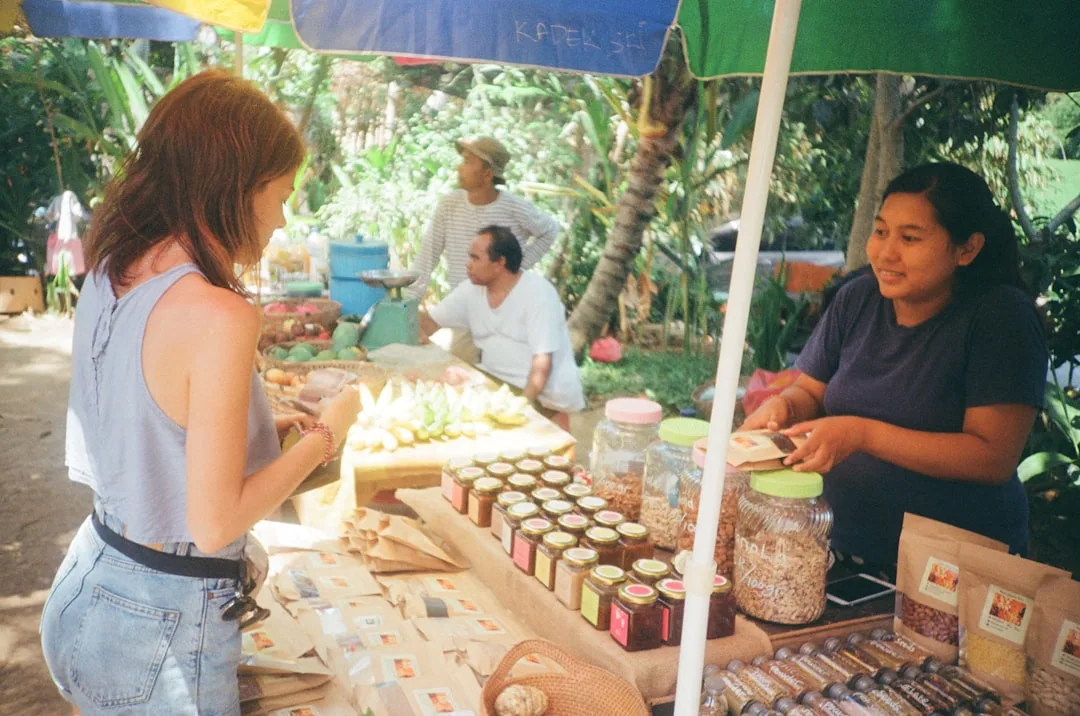
Eat where locals eat as your third tactic. This is even simpler. Skip the pizza-pasta tourist strip in the old town; find where local people actually eat. Often the meals cost half as much, taste better, and 100 percent stays local. Markets instead of supermarkets, traditional crafts instead of industrial souvenirs.
“Meet the Locals” programs and cooperatives form your fourth option. Some operators offer “Meet the Locals” experiences — cooking classes with families, coffee plantation visits where you meet the farmer, textile workshops with women’s groups. These aren’t tourist theater, but actual activities where small fees flow directly to the people you meet.
The Uncomfortable Truths
This is where honesty matters. Fair-trade travel doesn’t solve all problems with modern tourism. It’s an attempt to contain damage, not transform tourism wholesale — and there are legitimate reasons for that restraint.
Eco-tourism displaces too: Eco-tourism protects forests and wilderness, yes. But it often displaces traditional agriculture and small-farmer livelihoods. A mountain farmer in the Alps or a rice farmer in Bali often faces economic pressure to convert land to tourism use. “Eco-tourism” can thus become a form of gentle colonization — the wealthy visitor comes, protects nature from the poor, and the poor are expected to become tour guides instead of pursuing their own economic projects.
Greenwashing is real: Not every “Fair Trade” or “Eco-Certified” label delivers what it promises. The certification industry itself is industrialized and often opaque. The Forum Anders Reisen label is relatively rigorous because it emphasizes reciprocity and regular audits. Many others are weaker. If you’re skeptical, ask the operator what independent certification they hold and when the last verification occurred.
Structural limits remain: Fair-trade travel doesn’t automatically solve over-use. Iceland, a nation of 370,000 people, received 2.3 million visitors annually by 2019 — even if all traveled “fairly,” the infrastructure is swamped. Some countries and regions have implemented visitor caps (Bhutan, the Galápagos, parts of Croatia). It’s not romantic, but sometimes necessary.
Fair-trade travel is not a moral dividing line between “good” and “bad” travel. Travel is complex. But it’s a deliberate attempt to structure tourism economies so they benefit local people rather than harm them.
When you plan a trip, the practical question isn’t “Should I travel at all?” — that’s not Sara’s framework. The question is: “How do I ensure my money arrives where it does the most good?” Fair-trade practices give you concrete answers.