Dining at Michelin Restaurants: Reservations Guide
A practical guide for travelers who want to dine at Michelin star restaurants — from early bookings through etiquette to affordable alternatives.
TravelFeelings Editorial Team
A phone call. A date. Two weeks of anticipation. The table is reserved. When you visit a Michelin star restaurant, the experience starts months earlier, long before you reach the door. And the process, honestly, is less romantic than the idea suggests.
A Michelin star rates the kitchen’s technical execution; it says nothing about a region’s food culture. Once you understand how these restaurants function, what distinguishes them from others, and how to gain access, you save time, disappointment, and money. This guide is a practical compass for travelers who want to understand why these places work. For those interested in culinary travel beyond Michelin stars, there are equally rewarding paths to authentic food culture without premium price tags.
What Michelin Stars Actually Mean
The Michelin Guide originated in the early twentieth century—initially as a road trip companion for motorists, later as a culinary benchmark. Today, over 3,000 restaurants across 32 countries are rated. One star means “a restaurant worth a visit,” two stars mean “worth a detour,” three stars mean “worth a special journey.” These definitions matter: each one frames a travel decision, which is what makes them more than simple grades.
Germany currently has 339 Michelin-starred restaurants: 12 three-stars, 48 two-stars, and 279 one-stars. France has 668 (31 three-stars, 84 two-stars, 553 one-stars). This density shows how established Michelin dining is as a system.
The culinary approach of these restaurants differs structurally: they offer tasting menus with five to twelve courses, each prepared and timed with precision. A meal lasts 3–4 hours. Therein lies a distinction from regional or informal food culture: the priority is the continuity of the craft and control over every component, ahead of the guest’s comfort.
How Reservations Actually Work
Rule number one: reservations don’t open randomly; they follow a schedule. Most renowned restaurants release tables 30–90 days in advance—and well-known houses often fill these slots within minutes. A three-star restaurant in Paris can be booked six months out.
Timing is the key. You must know the release dates. Many restaurants follow patterns: the first Tuesday of the month at 11 a.m., or every Sunday at 6 p.m. Follow the restaurant on social media or sign up for the newsletter. When the reservation window opens, you should either be logged into the website already (Resy, Tock, or OpenTable) or ready to call directly.
For top French and Italian restaurants, a direct call often pays off. While tourists book via apps, you—if you speak English or French even passably—can call and ask straightforwardly: “I’m traveling in October and am flexible with dates.” Many restaurants hold tables for such inquiries.
Lunch is easier to book and typically costs 40–50 percent less than dinner. In France, Michelin lunch menus often run 22–32 euros; the dinner menu at the same restaurant might be 80–150 euros. This reflects operational logic. Fewer guests, lower costs, same kitchen.
Friday and Saturday are booked solid. Tuesday through Thursday have capacity. Even Monday lunch is often available if the restaurant is open then.
Shift your reservation time an hour earlier or later. An 18:30 slot is easier to get than 19:30. A table for two is easier than a table for four.
On Resy and Tock, you can sign up for cancellation notifications. It sounds unglamorous, but it works: if a guest cancels last-minute, you receive a push notification, and you can secure an “impossible” date within 24 hours.
Preparation: What to Tell the Restaurant
Disclose dietary restrictions, allergies, or cultural food preferences when you book. A good Michelin restaurant responds with professionalism. They adapt, prepare alternative components, inform the chef. Don’t call the restaurant “that place with stars” — use its actual name when you call.
Confirm your reservation three to four days before with a call or email. It shows the restaurant you’re serious, and it gives them a chance to clarify last details.
Research the dress code. Many star restaurants are informal today: a clean shirt or an elegant blouse, slacks or a dress—that’s enough. Some require business casual or a jacket. You’ll know in advance.
The Meal Itself: What to Expect
The sommelier is an expert in pairings, there to help. They’ll spend time with you and explain why this particular Riesling Auslese complements this course. If you’re uncertain, say so: “Which wine would you recommend for this meal?”
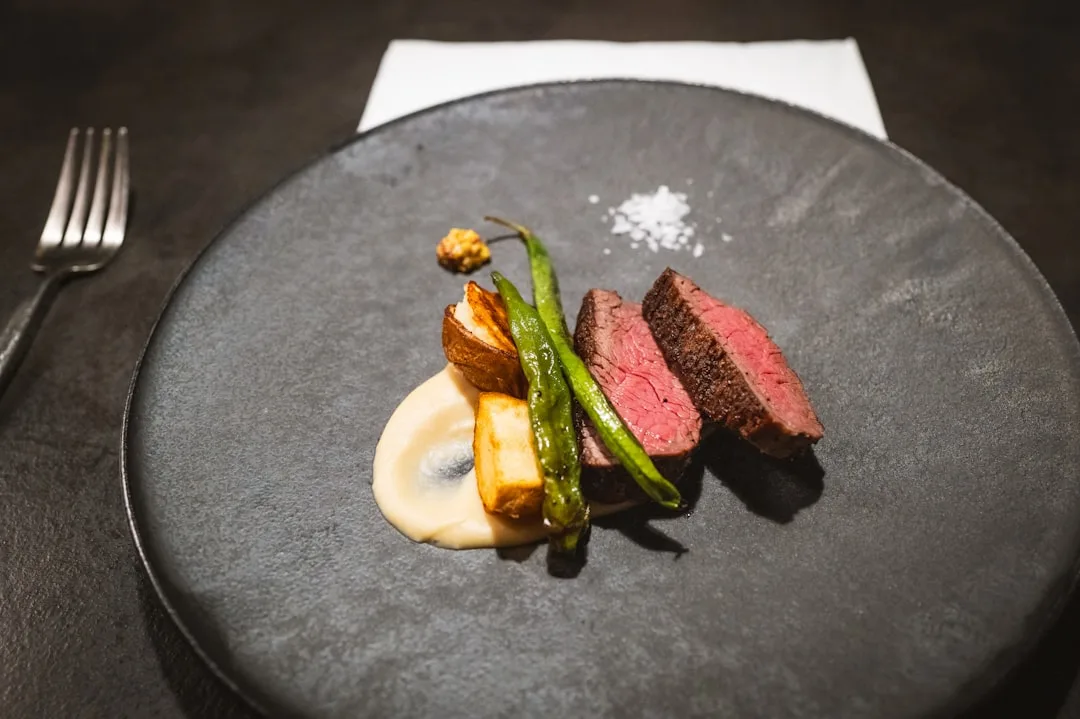
The portions are small. Each course is individually conceived, with the artistry in the composition rather than the quantity per plate.
There are often small extras: an amuse-bouche at the start, palate cleansers between courses (a sorbet, a tea), petit fours at the end. These interim elements are deliberate craft.
Begin with the outermost cutlery and work inward, course by course. If you’re unsure, watch the other diners or ask the server—that’s just gathering information.
Four hours is normal for such a meal. Take that time. Don’t rush. The rhythm of the evening, the pauses between courses, the server’s explanations—that’s part of the experience.
Dining More Affordably: France and Beyond
France is the land of affordable Michelin restaurants. In countries like France, it’s culturally acceptable for a one-star restaurant to offer a simple lunch menu for 22–32 euros. Restaurants like La Robe in Lyon or La Galinette in Perpignan offer full menus for under 30 euros at midday. For luxury travelers seeking value at moderate costs, this mirrors the broader concept of luxury travel at unexpected price points.
The cooking is every bit as good. The operation is simply smaller, profit margins are calibrated differently, and regional food culture is less oriented toward luxury positioning.
Germany has added young, innovative restaurants in recent years: L.A. Jordan in Deidesheim recently rose to three stars, and THE CLOUD by Käfer in Munich received two stars for its culinary nomadism concept—a concept built on concentrated craft instead of the classical fine-dining format. These too are more accessible than you might think.
Insider Tricks and Alternatives
Many star restaurants offer bar seating without reservation. The chef cooks for the bar counter, you sit right at it and experience an informal version of the tasting menu. It’s often more intimate than the dining room.
Some star chefs offer cooking courses or chef’s table events. These are expensive, but you cook with the chef or in the kitchen as a real participant. These require advance planning, often months.
Luxury hotels in Michelin cities—Paris, Berlin, Stockholm—have concierge services that can secure reservations, often through personal relationships. It’s expensive and hardly subtle, but it delivers.
Services like Sienna Charles offer exclusive access to top restaurants. For an annual fee of approximately 75,000 USD (approximately 67,500 euros), you get access to three-star tables worldwide. This is for the high-net-worth traveler, not for the ordinary visitor.
A Final Thought
Treat Michelin stars as one possible tool for engaging with regional food culture — it shouldn’t be the goal itself. Not every great culinary experience carries stars, and not every star means you should dine there. Those who dine to collect stars miss the essential: the chef’s handiwork, the continuity of a tradition, the texture of something made with care. For deeper exploration, visit our culinary travel category for diverse food-focused journeys.
If you choose to reserve, book early, be flexible, use the lunch hour, and speak the language of operational logistics. Access follows practical rules more than romantic ones—and once you understand these, the experience itself becomes all the more profound.