Meditation While Traveling: Five Minutes Daily
Real mindfulness while traveling is not a 30-minute routine. Learn how five minutes daily keeps you present—with proven techniques for planes, hotel rooms, and everywhere in between.
TravelFeelings Editorial Team

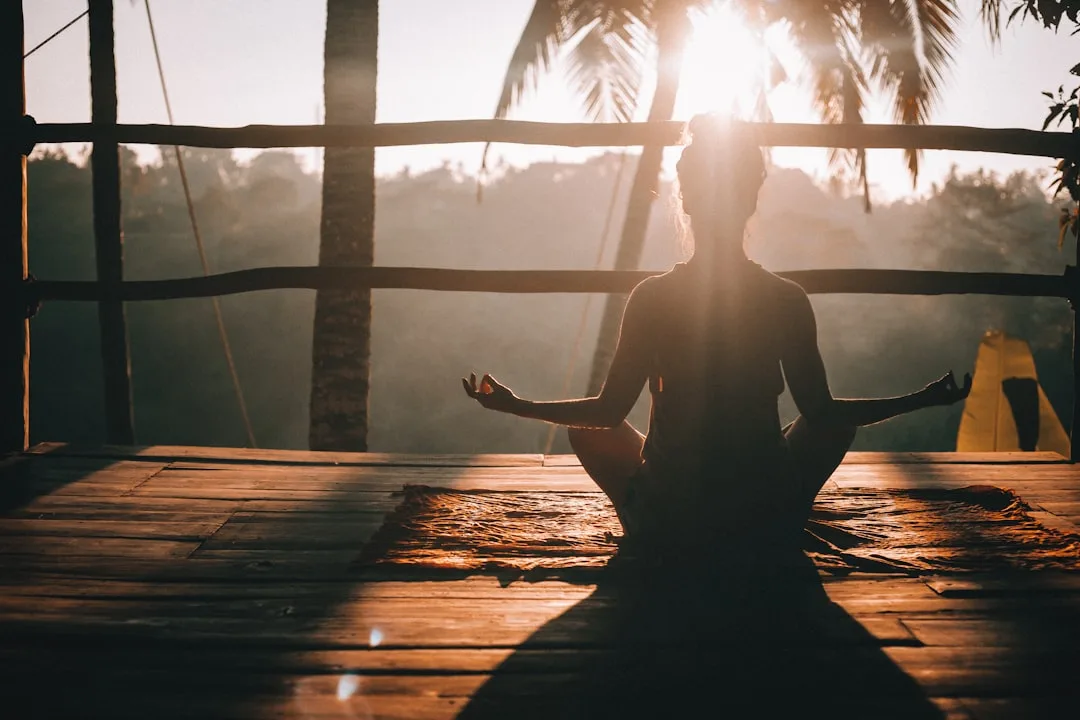
The fantasy is popular: You’re sitting in lotus position on a Bali beach at your yoga retreat, and suddenly inner peace arrives. You fly home and meditate every morning before getting up. It’s a pleasant dream. Reality is different.
I’ve experienced over thirty wellness destinations through intensive practice and regularly observed travelers who pressure themselves to maintain their meditation routine while traveling. They fail. The issue comes down to one thing: travel breaks structure. Airplane noise, shifting time zones, constant stimulation—these are real challenges. Those who don’t adapt their practice become frustrated. That’s the opposite of mindfulness.
What I consistently observe: the most successful traveling meditators are the realistic ones. Five minutes daily delivers measurably more impact than the perpetual failure of a 30-minute practice. Five minutes weaves into a full travel day.
Breath Meditation: The Practical Foundation
Breath meditation is the simplest technique while traveling—it needs no space, no silence, no equipment. It travels with you everywhere. On planes. At bus stations. In a hotel room at 3 a.m. when jet lag hits.
The principle is as ancient as it is straightforward: You direct full attention to your inhale and exhale, observing it instead of trying to control it. When thoughts arrive—and they will—you simply notice and gently return to the breath. Noticing the thought and returning is the practice itself.
Two minutes suffices as a start. Sit upright (chair, bed edge, upright in a plane seat) and focus on air flowing through your nostrils. Feel the coolness as you inhale, the warmth as you exhale. Don’t force it. Just observe.
The 4-7-8 breathing technique is a refined variation that measurably calms your nervous system. Inhale for four seconds, hold for seven, exhale for eight. The ratio matters more than the absolute count. If four-seven-eight feels too long, use two-three-four. The effect remains. Particularly before sleep when jet lag strikes, this technique works reliably.
Body Scan: Presence Rather Than Escape
Body scan is a subtle practice. It directs attention systematically across different parts of your body and dissolves tension you don’t consciously feel while traveling—because you’re constantly in motion.
Lie down (hotel bed, grass in a park, even a plane seat reclined). Close your eyes. Begin at your toes and slowly move attention upward: feet, shins, thighs, belly, chest, arms, neck, head. At each location, ask yourself: Is there tension here? Heat? Coolness? A sense of weight? You change nothing. You simply observe.
This sounds elementary yet works profoundly. After ten minutes your body is regrounded. Your nervous system shifts from fight-or-flight mode (sympathetic) to rest-and-digest mode (parasympathetic). This is measurable. Heart rate drops. Digestion normalizes. Sleep deepens.
Walking Meditation: Mindfulness in Motion
Many travelers equate meditation with sitting. That’s too narrow. Walking meditation is made for the road—for parks, for paths between attractions, for the everyday movement that happens anyway.
The method: You walk more slowly than normal, perhaps one-third your usual pace. Direct full attention to each step. How does the foot lift? How does it land? How does your weight shift? Simultaneously, you take in your surroundings without judging them—the birdsong, the color of facades, the scent in a narrow street. That’s presence.
Walking meditation in a travel day has a major advantage: it doesn’t look odd. Nobody gets uncomfortable watching you walk slowly and attentively through a city. It’s inconspicuous — and that’s exactly what makes it effective. After a 20-minute walking meditation through an unfamiliar neighborhood, you’ve seen and felt more than on three tourist days with camera purchases in souvenir shops.
Managing Distraction and Noise
Here’s where it gets nuanced: The assumption that you need a quiet environment to meditate is a myth that abandons travelers.
This is subtler than commonly stated. Your resistance to the noise is the real problem, more than the noise itself. An airplane engine is loud, yes. But the effort to ignore that noise is more exhausting than consciously hearing it. So when you’re sitting in a loud hotel trying to meditate, don’t attempt to block out voices. Instead, try to hear them fully—without judgment. “That’s someone laughing. That’s a car. That’s music next door.” No narrative. No judgment. Just observation.
This reframing has measurable effects. It calms your nervous system because you stop fighting. Acceptance here is intelligent adaptation.
Noise-cancelling headphones make sense on planes and trains—to reduce sensory overload — silence isn’t the goal. That’s a practical tool, and using it doesn’t mean you’ve failed at “real” meditation.
Small Moments Count
What I consistently observe: Travelers waiting for perfection—the right moment, the right location, a full hour of time—rarely build a habit. The ones using small moments do.
Here’s the crucial point: Five minutes of breath meditation in your hotel hallway with morning tea has more substance than romanticizing a 30-minute session you won’t do. One minute of walking meditation from your accommodation to the café is more mindfulness than a rushed sightseeing tour. A body scan at night in bed before sleep costs no time—it was already there; you’re simply using it differently.
The best practice is the one you actually do — a planned 30-minute session doesn’t count if it never happens.
Techniques for Specific Scenarios
When jet lag or sleep disruption hits, try a body scan before bed combined with the 4-7-8 breathing technique. It signals your body: we’re in rest mode. This works because it’s physiological. The extended exhale rhythm measurably settles your parasympathetic nervous system. Two to three cycles often suffice to fall asleep.
Flight anxiety or travel restlessness responds well to breath meditation with a point focus. Concentrate only on the tip of your nose—how the air creates pressure as you inhale and exhale. It’s concrete enough to interrupt anxiety thought loops. Often this works better than general affirmations.
In crowded places like airports or train stations, three minutes of walking meditation helps. Move deliberately—from A to B, but slowly. It gives your body a sense of control and structure where chaos reigns. It’s remarkably practical.
After full travel days, a body scan lying down for five to ten minutes serves well. It’s necessary relief for a nervous system that’s been in high alert for hours.
Realistic Expectations
Here it gets serious: The promise that meditation will “transform” you, “heal” you, or grant you “inner peace” is marketing.
The reality is more discreet and practical. Regular mindfulness—five minutes daily—measurably improves your stress resilience. You sleep better. You respond less impulsively to frustration. You notice more while traveling because you’re more present. That’s neurology, plain and simple.
On the road, it matters more. You won’t become enlightened on a Goa beach. But you’ll be more present. You’ll be less driven by fear and distraction. You’ll experience the places you visit more deeply, whether on a quick getaway or a full wellness retreat.
That’s sufficient. That counts for something.
Five minutes daily, everywhere, without excuses — that’s the whole method. That’s practical discipline for adults who genuinely want to improve their lives.