Beach Holiday with Your Toddler – A Practical Guide
A practical guide to beach holidays with toddlers and babies. Tips for safety, sun protection, daily routines, and realistic budget planning for family beach trips.
TravelFeelings Editorial Team
Why Beach Holidays with Toddlers Are Actually Doable
Many parents assume that taking a child under three to the beach equals chaos. That’s too pessimistic. But here’s what’s also true: it doesn’t work if you still think like you did before kids—jumping into the water early, spending the entire day on the beach, dinner reservations at 7 PM. To be honest, the day will follow different rhythms. But that can be deeply relaxing once you accept it mentally beforehand.
In practice, toddlers handle beach days well when three conditions are met: pleasant temperatures, shallow water, and a clear daily structure with built-in breaks. If a destination ticks those boxes, you’ll find that even a two-year-old spends several hours at the water without parents reaching complete exhaustion.
Timing Is Everything
Most families travel in July or August because that’s when school breaks align—a mistake for toddlers under two. These months mean temperatures over 30°C in popular destinations, and that kind of heat is genuinely hard on babies. A one-year-old’s body doesn’t regulate temperature as efficiently as older children’s do.
May and June are better. Water temperatures sit around 19–23°C (depending on destination), air temperatures hover at a comfortable 22–28°C. That’s ideal for toddlers—not scorching for land activities, warm enough for genuine water enjoyment. A bonus: beaches are far less crowded than during main holidays.
If you’re flexible and your child isn’t school-age yet, book weekdays outside school holidays. Flight prices drop 40–60 percent, and instead of 500 people on the beach, you’ll find 50.
Where Toddlers Can Actually Swim Safely
The most critical beach factor is water depth and entry gradient. Your child needs at least 20 meters of entry with less than one meter depth—that’s a basic safety requirement. Babies can drown in 20 centimeters of water silently. Arm’s-length supervision is not optional.
Top beaches for these conditions:
- Balos Beach, Crete: A protected lagoon with warm, shallow water. The bay is enclosed, no waves, turquoise water. Parking available, taverna onsite.
- La Cinta, Sardinia: Flat entry without pebbles—ideal for children still building walking confidence. Sand is fine, water is clear.
- Praia de Melides, Portugal: A calm lagoon area alongside open ocean. Depending on waves and your child’s mood, you have flexible options.
- Costa del Sol, southern Spain: Wide beaches with gentle slopes. Water warms quickly. Infrastructure everywhere.
What these beaches share: parking, beachside café or bar, sometimes lifeguards. Secluded paradise beaches don’t work with toddlers—you need proximity to restrooms, fresh water for rinsing, and medical help if needed.
The Daily Structure—The Art of the Midday Break
This happens repeatedly: parents who try spending the entire day on the beach with toddlers end the afternoon with a completely depleted child and their own burnout. A structured daily rhythm makes the whole thing easier for everyone.
This schedule has proven most effective:
8:00 to 11:00 AM – Morning Beach Time: Your child is rested, the sun isn’t intense, temperatures are pleasant. This is active playtime: water, sand, exploration. Your child is engaged, you’re present. Around 30–40 minutes in water, then sand play. For toddlers under 18 months, keep water time to 20–30 minutes.
11:30 AM to 3:00 PM – Midday Break in Shade: This break is essential. Your child needs rest, and so do you. Back to your accommodation for lunch (warm, not random), a midday nap. If your accommodation is beachside: retreat to a lounge under a shade structure. No rushing around. Children sleep better when they’re settled—not when they’re overstimulated.
3:00 to 6:00 PM – Afternoon Session: After nap time, ease back to the beach without pressure. Sand isn’t scorching anymore. Water play, but shorter. Then gradually head back, no rush. 6 PM dinner, 7 PM bedtime—that predictable timing is exactly why you can enjoy a glass of wine in the evening instead of collapsing on a lounger yourself.
Sun Protection and UV Safety
Baby skin has less melanin and a different pH than adult skin. Sunburn before age one represents genuine injury, not just redness.
Essential beach items:
- Sunscreen: Mineral SPF 50+ filters. Not the budget version, but something you know and your child has worn before. Chemical filters can irritate very sensitive skin. Use a brand specifically formulated for babies, not the family multiuse option.
- UV-Protective Clothing: Swim shirts (rashguards) for water, lightweight linen pants for land. It looks silly at first—it’s more effective than constant reapplication.
- Hat: Wide-brimmed, not a baseball cap. Ears and the back of the neck are vulnerable.
- Sunglasses: Only if your child cooperates. Don’t force it.
When applying sunscreen: Don’t be stingy. One teaspoon per body part is the rule. And no—“a little” sun isn’t healthy for under-threes. That’s a myth. Protection is safer than exposure.
Common Small Problems and Solid Solutions
Now for the practical stuff:
Salt Water Ear Infections: This happens. Your child dunks their head, salt water stays in the ear canal, after 2–3 days it swells—suddenly ear pain and screaming. Solution: bring child-specific ear drops (discussed with your pediatrician beforehand). Gently rinse after water exposure. Yes, it’s unpleasant for everyone, but it’s not serious.
Diaper Rash from Salt Water: More common than people think. The salt-moisture-friction combo is perfect for irritation. What helps: one “diaper-free hour” daily (on a blanket, just clothes), fresh-water baths (sounds elaborate, takes 5 minutes), good barrier cream. And: a swim diaper isn’t a regular diaper. Swim diaper in water, regular diaper out.
Diarrhea After Temperature Changes: Your child spends two days in heat, possibly drinks too little, then you shift to new cuisine and different water—diarrhea results. It’s not serious but needs strategy: pack electrolyte powder (easy to dose), encourage drinking (water, tea, diluted juice), offer familiar carbs (rice porridge, rusks). Continue normal food—the old carrot-and-rice approach is outdated.
Heat Exhaustion: Your child becomes sluggish, drinks little, the diaper is dry. That’s your signal: immediately to shade, offer cold water, apply wet cloths to forehead and neck. This doesn’t happen if you honor the daily structure.
Accommodations: Apartment Beats Hotel
The clear recommendation for families with toddlers: vacation rental, not hotel. Why?
A hotel becomes problematic when your child wakes at 11 PM and you suddenly need to cook because hunger has struck. Or laundry—with a one-year-old, daily washing is a genuine necessity. Most hotels charge extra for laundry.
A vacation rental solves these issues: kitchen for meals on your schedule, washing machine, daytime rest space independent of checkout times. Costs are often comparable to hotels, but quality of life is dramatically higher.
When booking, check:
- Refrigerator present (non-negotiable)?
- Cooking surfaces (not just microwave)?
- Washing machine in the unit or building?
- Distance to beach on foot with toddler and stroller?
- Outdoor space or balcony (for morning coffee without obligations)?
Hotels can work when they’re explicitly “family-friendly”—with kids’ clubs (for occasional 1–2 hours), separate pool (safety), child cutlery and high chairs. But even then: a vacation rental gives you more autonomy.
The Travel Pharmacy—What Actually Matters
For every toddler beach holiday, pack this core pharmacy:
- Fever reducer: Suppositories (dosed by weight, not age). Confirm dosing with your pediatrician beforehand, not Google.
- Diarrhea aids: Electrolyte powder, not imodium (not approved for babies).
- Ear drops: Per pediatrician guidance. Don’t improvise.
- Saline nose drops: For babies, not decongestants.
- Diaper cream: Your proven brand, not an unknown product.
- Insect spray: Icaridin rather than DEET for toddlers.
- Thermometer: Digital quick-read type.
- Basic first aid: Sterile wipes, small bandages, disinfectant.
- Eye drops: For salt-water irritation.
Don’t pack: antibiotics without prescription. Salves you’ve never tested. “Completely safe” natural products without evidence.
Before departure: ask your pediatrician for the name of the best pharmacy at your destination. Note the address. If something urgent happens, you know where to go.
Flight Length and Getting There
With one-year-olds under three: shorter flights are always better. Under three hours is ideal. For three to five hours, choose a direct flight and reconsider your flight time.
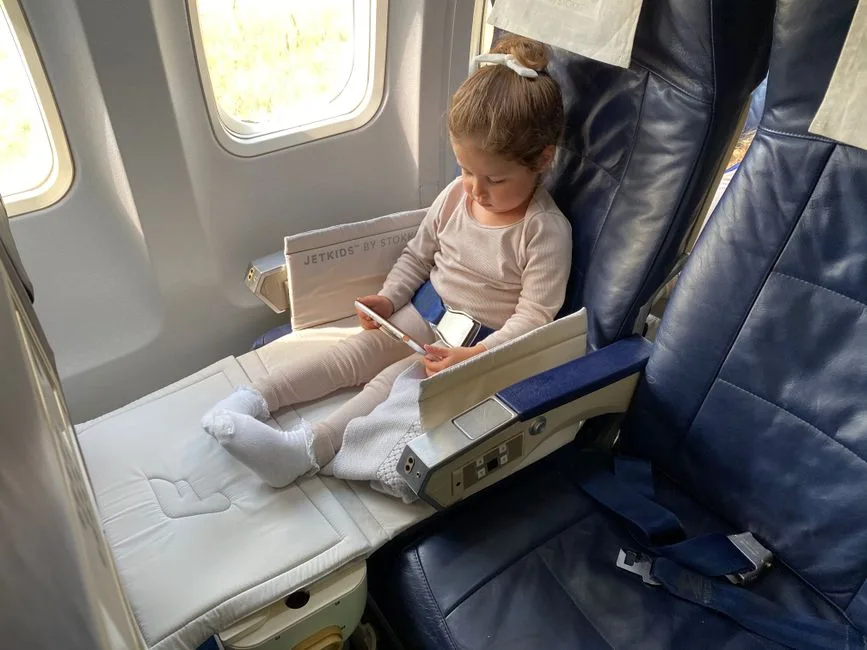
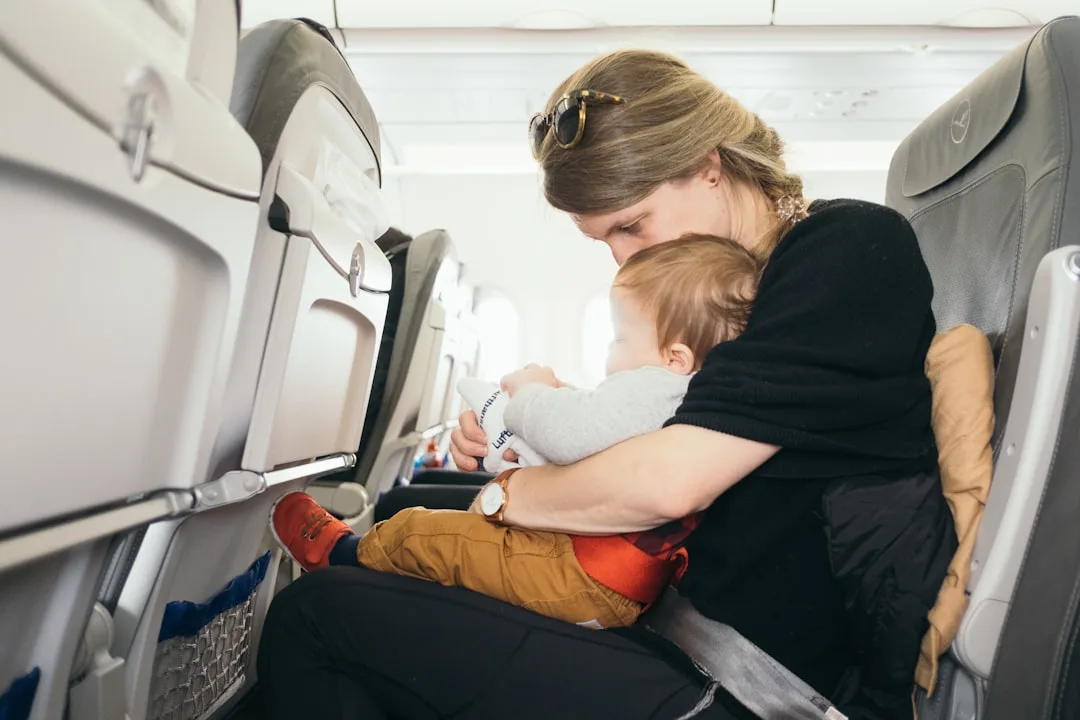
Night flights are underrated. A night flight at 8 PM means your child sleeps on the plane. You sit beside them, they doze. That’s far less turbulent than a 10 AM flight where your child wants to play, gets bored, and you arrive with three backup shirts and pure frustration.
Direct flights even if they cost more. Connecting with a one-year-old is organizational hell—new terminal, hunting for changing facilities, re-security screening, new boarding. A direct flight costs $150–250 more—that’s well-spent money.
Realistic Budget Planning
Many parents underestimate costs and arrive surprised. Here are real numbers for two weeks with family (two adults, one to two toddlers), June 2026:
- Flights: $450–750 total (two adults + toddler; children under two often fly free or at 15 percent of adult price) when booked outside school holidays
- Accommodation: $800–1,350 per week (vacation rental, well-maintained, with kitchen, popular family destinations)
- Car rental: $280–500 per week (if needed)
- Groceries/dining: $110–170 per week (significantly less if you cook; much more with daily restaurants)
- Activities/childcare: $0–250 (optional)
Realistic total budget for two weeks: $2,000–$4,000.
That’s not luxury, but not budget either. Variation depends on: booking timing, destination country (Portugal cheaper than Switzerland), how much you self-cater. More family travel guides and inspiration available in our collection.
The Mental Piece—Rest with a Toddler
Here’s what travel magazines skip: traveling with a toddler doesn’t mean you return relaxed. You return because you’ve been together as a family, your child has experienced new things, and you realize you’re not trapped in your house.
Rest with a toddler looks different. Picture your child safely asleep under the umbrella, you sitting beside them with a book, sipping water—and actually enjoying that moment. That’s real relaxation, not Instagram relaxation.
Here’s what’s also true: the trip will be rough at some point. Your child will cry on day four, you’ll realize you miscalculated flight time, the apartment will feel too small. That’s normal. That’s family travel.
The useful question is how you handle problems when they arrive, not how to prevent every one. With that frame of mind, you’ll find that a beach holiday with a toddler shifts from burden to genuine respite—for everyone.